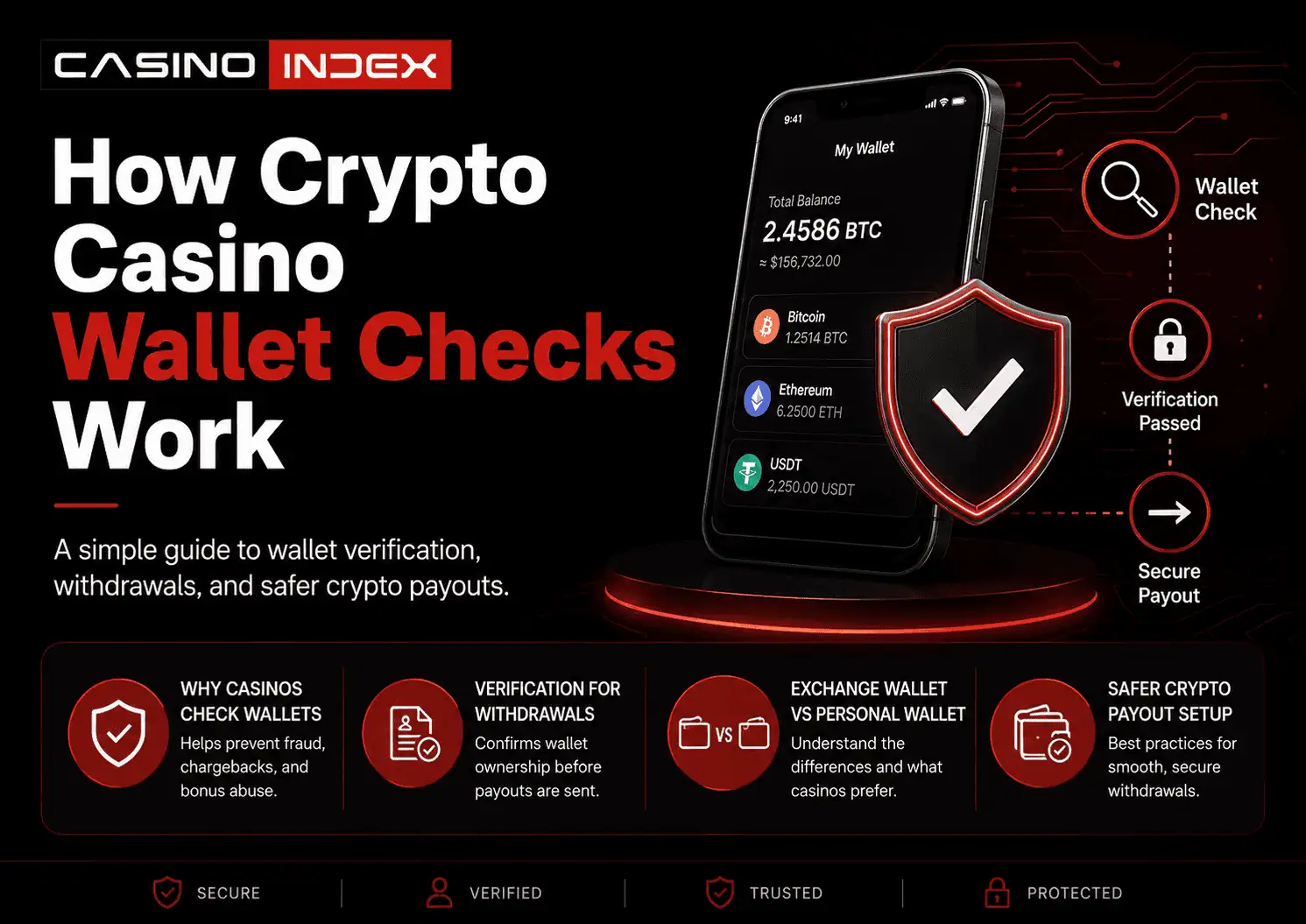
How Crypto Casino Wallet Checks Work
Crypto feels easy until the withdrawal gets reviewed.
The deposit lands fast. The balance appears instantly. Games open without much friction. Then the payout stage begins, and the casino starts caring about something many players barely thought about before: the wallet itself.
That is where a lot of confusion starts.
Many players still assume crypto removes most payment checks. In reality, crypto changes the shape of the checks. A casino may not ask for a card photo or bank statement the same way a fiat casino would, but it still needs to understand where the funds came from, where the payout is going, and whether the wallet route matches the account behind it.
That is why wallet checks matter much more than many crypto-casino guides suggest. The real question is not just whether you can deposit with crypto. The real question is whether your wallet setup still makes sense once the casino reviews a withdrawal.
This guide explains why casinos check your crypto wallet, how wallet verification for withdrawals usually works, what changes with exchange wallet vs personal wallet use, and what a safer crypto payout setup actually looks like before money gets stuck in review.
This topic also connects naturally to CasinoIndex guides on how to deposit crypto in online casinos, the crypto wallet guide, casino payment matching rules, and what a safe casino KYC process actually looks like.
Quick review table
| Casino | Why it fits this topic | Review |
|---|---|---|
| Sportsbet.io | Strong published guidance on personal-wallet use and controlled funding routes | Sportsbet.io review |
| Shuffle | Strong example of wallet screening, address risk checks, and withdrawal review logic | Shuffle review |
| CoinCasino | Clear example of mandatory withdrawal-stage verification at a crypto-first brand | CoinCasino review |
These three work well here because each one highlights a different side of the same issue. Sportsbet.io is strongest on wallet-control logic. Shuffle is strongest on AML and address-screening logic. CoinCasino is strongest on the point that crypto convenience does not remove withdrawal verification.
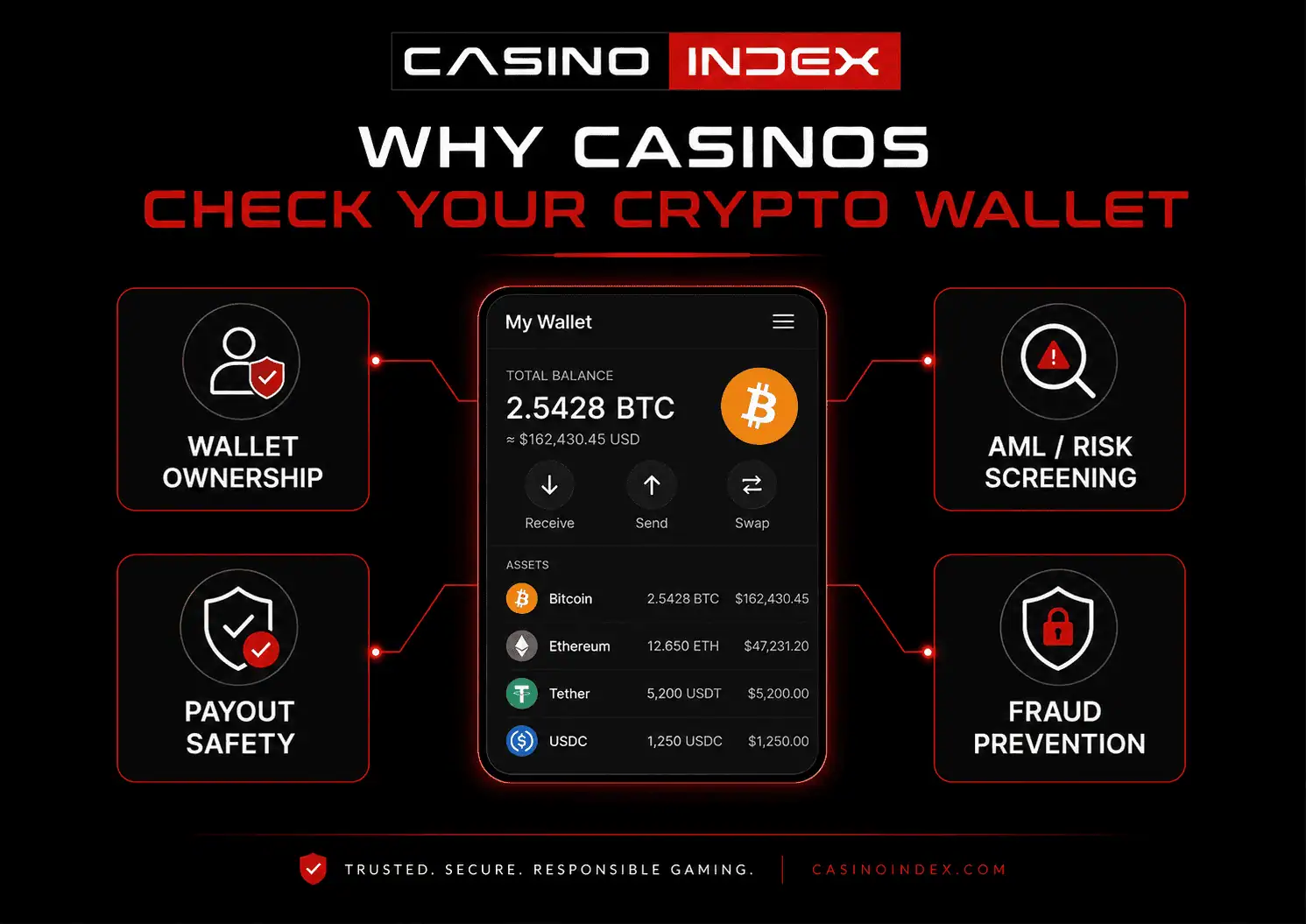
Why casinos check your crypto wallet
A casino does not only check the coin.
It checks the payment path.
That path helps the operator answer several practical questions. Does the wallet appear to belong to the same user who opened the account? Does the transaction route make sense? Does the address trigger sanctions, fraud, or jurisdiction risk? Does the payout destination fit the way the account was funded?
Those questions matter because the casino takes real operational risk once it sends money out.
Ownership matters more than players expect
The first issue is simple: control.
A casino wants to know whether the wallet funding the account, or receiving the payout, actually belongs to the same person using the casino account. If that connection looks weak, the operator has a reason to slow things down.
That is especially important at withdrawal stage. A deposit coming in from one route and a withdrawal suddenly going somewhere else can look unusual, even when the player thinks the change is harmless.
Wallet checks also act as AML controls
Crypto casinos do not treat wallets as neutral containers.
They treat them as risk signals.
A wallet address can reveal patterns tied to restricted jurisdictions, suspicious services, mixers, or other activity the casino does not want to touch. That is why some crypto-first casinos screen wallet addresses before funding or payout.
For the player, that means the wallet itself can become part of the review process, not just the account identity.
Payout safety is part of the check
Crypto transfers move fast, but they do not forgive mistakes.
If the destination wallet is wrong, unsupported, or tied to the wrong network, the casino may not get a second chance to fix it. That gives the operator a strong reason to review payout details before releasing funds.
This is one reason wallet checks often become stricter at withdrawal stage than at deposit stage.
Fraud prevention sits underneath everything
A clean wallet trail helps the casino trust the account.
A messy route raises questions.
That does not mean every review points to wrongdoing. In many cases, the issue is simply that the payment story looks inconsistent. Even so, casinos still need a route they can understand and defend internally before approving a payout.
That is the real answer to why casinos check your crypto wallet. The check is not anti-crypto. It is anti-mismatch, anti-fraud, and anti-confusion.
Exchange wallet vs personal wallet use
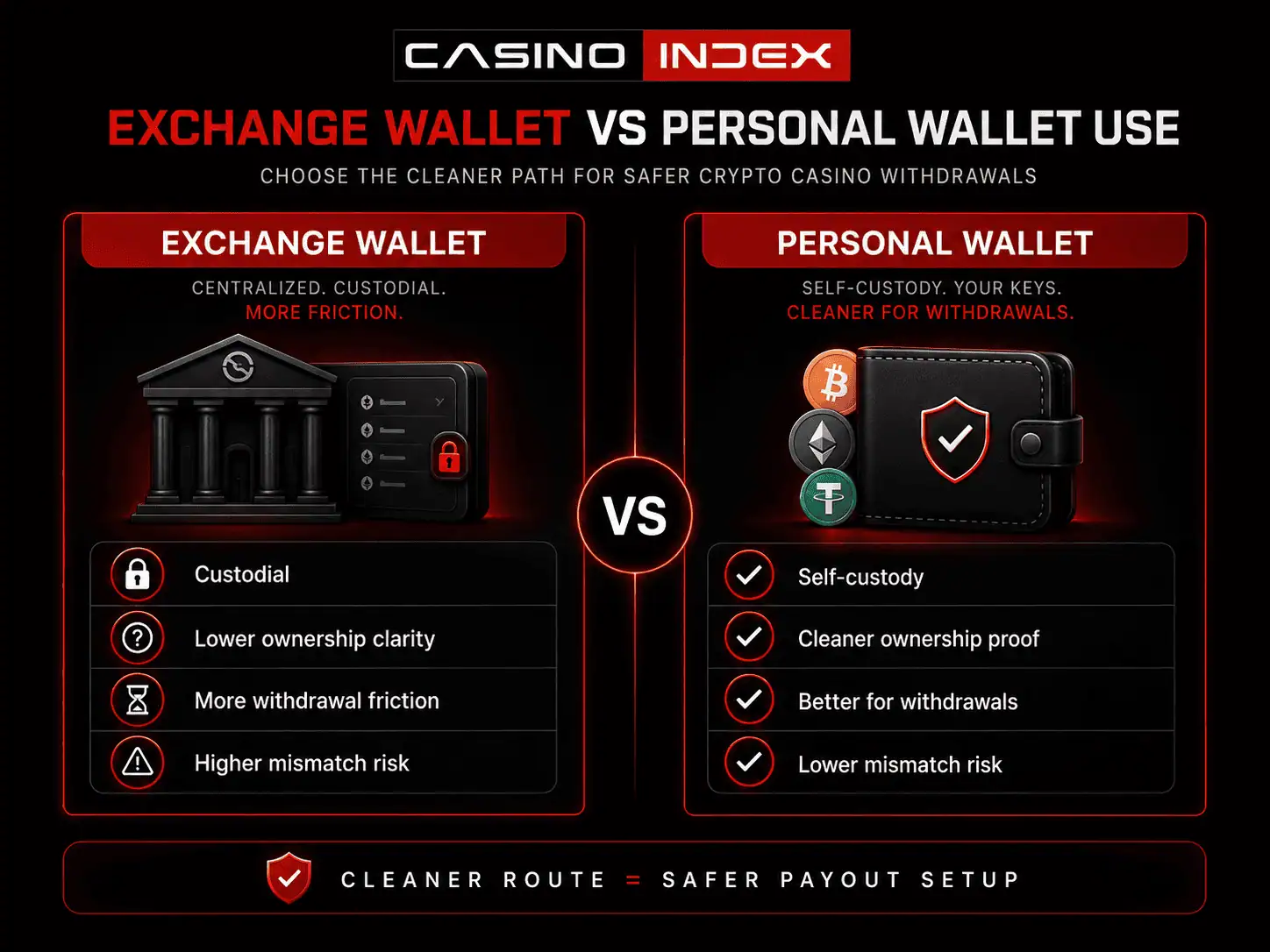
This is the most important distinction in the article.
A lot of players treat these two options as interchangeable. They are not.
What an exchange wallet really is
An exchange wallet usually means a custodial wallet.
The exchange controls the private keys. The user controls access to the account, but not true wallet ownership in the strongest sense. That setup is convenient for buying, selling, and holding crypto inside the exchange environment.
Convenient does not always mean clean for casino payments.
What a personal wallet changes
A personal wallet usually gives the user more direct control.
That makes the funding route easier to explain. You can buy on an exchange, move the funds into your own wallet, and then deposit from a wallet that sits closer to your direct control. That path creates a cleaner payment story.
It also makes the wallet setup easier to match later when a withdrawal is reviewed.
Why exchange routes can create more friction
An exchange wallet can still work on some casinos.
The problem is not that exchanges are automatically bad. The problem is that exchange-controlled routes can create more ambiguity. Addresses may rotate. Internal exchange routing may make the transaction path harder to interpret. The casino may see a valid payment, but still have a weaker ownership picture than it would with a self-controlled wallet route.
That is where exchange wallet vs personal wallet use becomes more than a technical detail. It becomes a trust and withdrawal issue.
Why self-custody usually gives the cleaner setup
For most players, a personal wallet is the safer middle layer.
You can still buy on an exchange. You just do not use the exchange as the whole payment identity. Instead, you move the funds into a wallet you control, then use that wallet for deposits and, ideally, keep the withdrawal setup just as consistent.
That structure reduces friction later.
Wallet verification for withdrawals
This is the point where many players get surprised.
The casino often lets the deposit in quickly. Then the first withdrawal request arrives, and the platform starts asking questions about identity, wallet control, or funding history.
That pattern is normal enough that players should expect it.
Why the withdrawal stage triggers more review
A deposit is easy for a casino to accept.
A payout is harder to defend if something looks wrong.
That is why many platforms wait until withdrawal stage before they ask for more documents, more clarification, or more proof that the wallet route makes sense. From the operator’s side, this is the moment when account control, wallet ownership, and payment consistency matter most.
What wallet verification can include
The review may stay simple.
The casino might ask only for standard ID and basic account verification. In other cases, it may want transaction history, screenshots, or more context around the wallet path. If the deposit came from one route and the withdrawal is going somewhere else, the casino may ask the player to explain the change.
The more unusual the route looks, the more likely the review becomes deeper.
Crypto does not remove KYC pressure
This is one of the biggest misunderstandings in the space.
Crypto can speed up payments. It does not remove the casino’s need to understand who is behind the account and where the funds are moving. That is why crypto-native casinos can still require verification before releasing a payout.
For the player, that means wallet verification for withdrawals should be treated as normal enough to plan around, not as a shocking exception.
Why mismatches create trouble
Most wallet problems come from bad setup, not dramatic fraud.
That is good news, because avoidable mistakes can be reduced.
Deposit and withdrawal routes should tell the same story
A common problem looks like this:
The player buys crypto on one exchange, deposits through one path, and then tries to withdraw to a completely different wallet with no clear bridge between the two.
That may still be innocent. It also gives the casino a reason to pause and ask whether the route still belongs to the same person.
Network mismatches are an easy way to create pain
Another common problem is network confusion.
A player deposits USDT on one chain, then later chooses a withdrawal path that expects another chain or another type of receiving wallet. Even when the casino approves the payout, the player can still create trouble by choosing the wrong destination setup.
This is one reason crypto withdrawals need more attention than many users give them.
Third-party wallet use raises obvious questions
The cleanest route is your route.
Once a deposit comes from one person’s exchange account and the withdrawal goes to another person’s wallet, the casino has every reason to slow things down. Even borrowed or shared wallets can create friction that the player could have avoided with a cleaner setup.
Payment matching still matters in crypto
Many players think matching rules only apply to cards and bank accounts.
That is too narrow.
Crypto casinos still care about whether the money path makes sense. They simply express that through wallet consistency, funding history, source checks, and payout-destination review instead of traditional card-name matching alone.
That is why payment matching logic still matters here, even when the payment rail is crypto.
Safer crypto payout setup
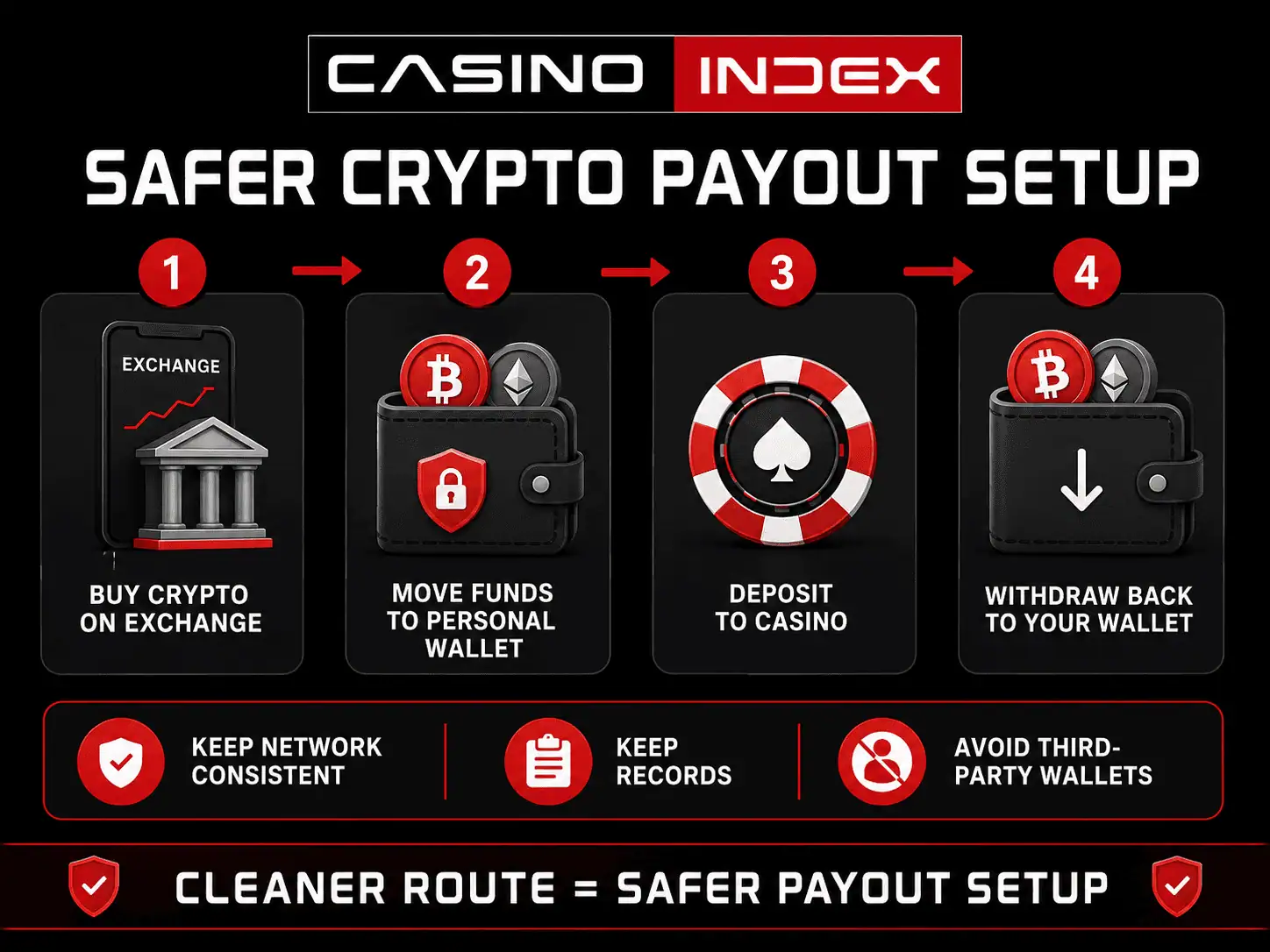
A safer setup is not complicated.
It just requires discipline.
Buy where you want, but separate the buying step from the gambling step
Buying crypto on an exchange is normal.
Using the exchange as your whole casino payment identity is where the setup gets weaker. A cleaner route uses the exchange for purchase, then moves funds into a personal wallet before deposit. That gives you a more consistent story if a withdrawal later gets reviewed.
Keep the network consistent
Do not treat chain selection as a minor detail.
If you deposit on a certain network, understand what network the casino supports for payout and what your receiving wallet supports on the other end. A wrong-network mistake can turn a normal withdrawal into a preventable mess.
Keep your records before you need them
A transaction hash matters more when the cashier starts asking questions.
Save transfer details. Keep screenshots. Know which wallet funded the account and which wallet is supposed to receive the payout. The goal is not to prepare for a fight. The goal is to avoid looking disorganized when the casino asks you to explain the route.
Avoid third-party shortcuts
Do not use a friend’s wallet.
Do not deposit from one person’s account and withdraw to another person’s address.
Do not create a funding trail you cannot explain cleanly in one paragraph.
That is what a safer crypto payout setup really means. It does not mean zero review. It means fewer avoidable reasons for the casino to stop the payout.
The three review pages that fit this topic best
If you want brand-level follow-ups after this guide, these three review pages fit best:
Sportsbet.io review is useful because it shows the personal-wallet-first logic clearly and helps explain why the funding route should stay under your control.
Shuffle review fits because it shows how deeply wallet screening can enter the account relationship once AML, address risk, and withdrawal checks come into play.
CoinCasino review belongs here because it makes the withdrawal-verification point impossible to miss: crypto-first branding still does not remove KYC at payout stage.
That mix is stronger than recycling the same usual brands again, because each one explains a different part of the wallet-check problem.
Final word
Crypto wallets make casino payments faster.
They do not remove the casino’s need to understand the route behind the payment.
That is the real takeaway.
Casinos check wallets because they need to understand ownership, reduce fraud, screen address risk, and make sure the payout path makes sense before the money leaves the platform. Exchange wallets can work, but they often create a weaker ownership story because the exchange controls the keys. Personal wallets usually create a cleaner funding path, a cleaner payout story, and fewer avoidable questions when the withdrawal gets reviewed.
That is why the smart setup stays simple:
Buy where you want. Hold the funds yourself. Keep the route clean. Make sure you can explain every address involved before the first withdrawal ever gets reviewed.

Talha Aydin has been active in cryptocurrency since 2017 and is a co-founder of Freecoins24 and CryptoMutant. Over the years, he has worked with crypto projects on community growth, giveaways, user acquisition and digital strategy while gaining hands-on experience across blockchain platforms and crypto markets. At CasinoIndex, Talha focuses on crypto casinos, withdrawals, payment systems, platform trust and the risks players face when moving funds between wallets and gambling platforms.