Close


Crash
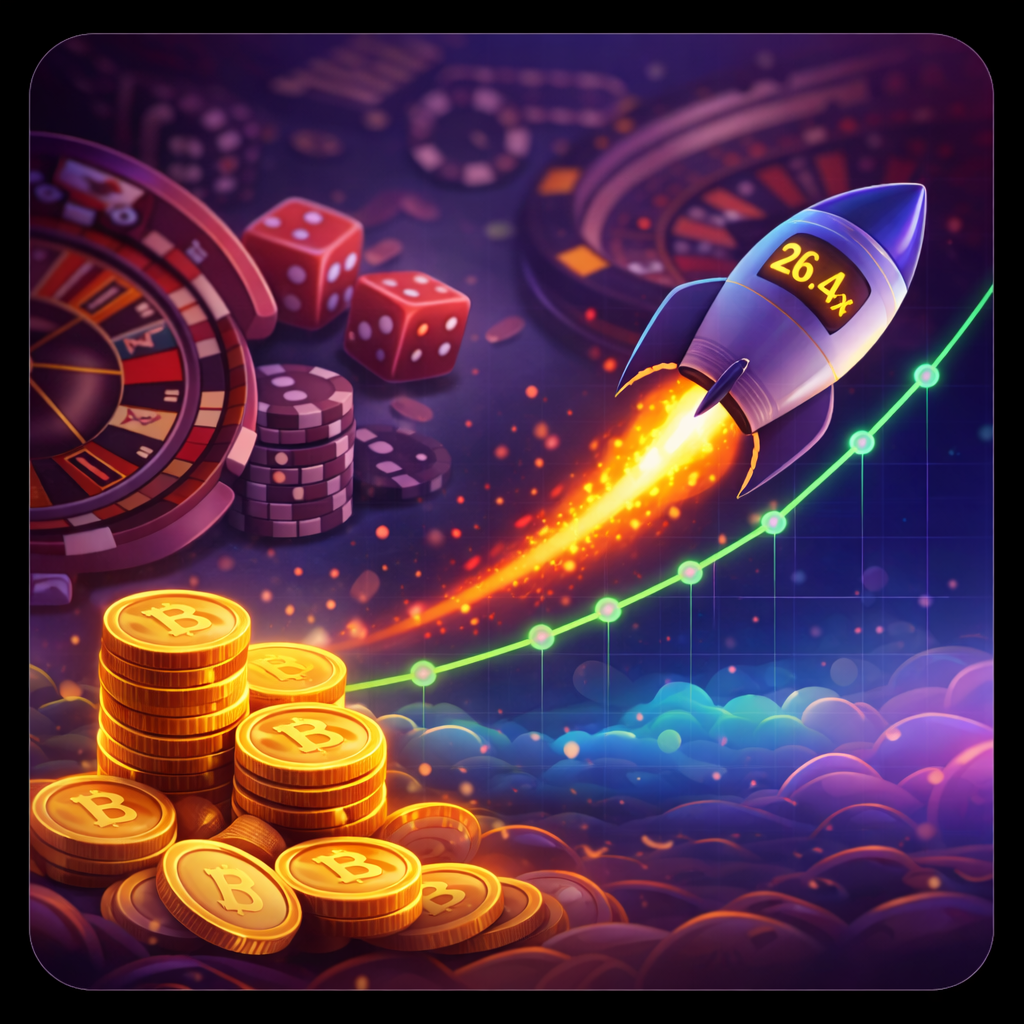
Crash games are built around real-time decision making rather than fixed outcomes. Instead of waiting for a result, players actively choose when to exit a round as the multiplier increases.
The key factor is not prediction, but risk management. Every round is generated randomly, and the crash point cannot be calculated in advance.
Many platforms use transparent systems to prove fairness. To understand how fairness and probability work in casino environments, review the Casino Security Guide. For a broader overview of game structures, see the Casino Game Types Guide.
3 games found
Sort by:
Latest added




Bitunix Exchange – 50% Deposit Bonus & 200x Futures Trading

Crash Games Explained: How They Actually Work
Crash games are multiplier-based casino games where outcomes unfold in real time. Each round starts at a 1x multiplier and increases continuously until it stops instantly at a random point.
Players must decide when to cash out before the crash happens.
Each round follows a fixed structure:
- A new round begins at 1x
- The multiplier increases continuously
- Players cash out manually or automatically
- The round crashes at a random point
- All active bets after the crash are lost
Unlike slots, where results are hidden until the end, crash games create transparency by showing the multiplier progression live.
What Makes Crash Games Different
Crash games combine elements of gambling and decision timing.
Key differences compared to other casino games:
- Real-time gameplay instead of instant results
- Player-controlled exit timing
- Simple mechanics with high volatility
- Fast rounds and continuous play
The result itself is still random, but the player controls when to secure profit.
How Fairness Works in Crash Games
Many crash games use provably fair systems or verifiable algorithms.
This means:
- Results are generated before the round starts
- Outcomes cannot be changed mid-round
- Players can verify fairness independently
To understand how provably fair systems compare to traditional casino models, see the Provably Fair Casinos Guide.
Volatility and Risk in Crash Games
Crash games are inherently high volatility.
- Early cashouts = smaller, consistent gains
- Late cashouts = higher rewards but higher risk
- Waiting too long = full loss
This creates a trade-off between safety and profit potential.
Unlike roulette or slots, volatility is directly tied to player decisions.
Manual vs Auto Cash-Out
Most platforms offer two play styles:
Manual Cash-Out
- Player decides in real time
- Higher control
- Higher emotional pressure
Auto Cash-Out
- Pre-set multiplier target
- Removes emotional decisions
- More consistent execution
Auto cash-out is often used by experienced players to avoid impulsive mistakes.
Where Crash Games Fit in Casino Strategy
Crash games sit between slots and table games:
- More control than slots
- Less predictability than roulette
- Faster pace than most casino formats
They are especially common in crypto casinos due to their transparent mechanics and fast gameplay.
You can explore platforms offering these games in the Best Crypto Casinos section.
What This Page Helps You Do
This category allows you to:
- Compare crash game formats
- Explore different providers
- Understand multiplier mechanics
- Evaluate gameplay speed and features
- Choose games that match your risk level
Crash games are simple to enter, but difficult to manage without understanding risk.
🔥 CRASH MISTAKES, MYTHS & FAQ (COMBINED SECTION)
Crash Game Mistakes, Myths & Real Answers
Crash games create the illusion that players can “read” patterns. In reality, every round is independent and generated randomly.
Common Crash Game Mistakes
- Holding too long for higher multipliers
Greed leads to most losses. High multipliers occur less frequently. - Chasing losses after crashes
Increasing bets does not improve probability. - Ignoring volatility
Crash games produce long losing streaks. - Playing emotionally instead of systematically
Fast gameplay encourages impulsive decisions. - Not using auto cash-out
Many losses come from hesitation or late reactions.
If you want to understand how risk and bankroll management apply across casino games, review the Casino Bonus Guide.
Crash Game Myths Explained
- “You can predict crash points”
False. Outcomes are generated randomly. - “Patterns exist after multiple rounds”
What players see is variance, not patterns. - “Waiting longer increases chances”
It increases payout potential, not probability. - “Crash games are skill-based”
Decision timing affects risk, not outcome generation.
Crash Game FAQ – Real Answers
Are crash games based on luck or skill?
They are probability-based. Players control when to cash out, but cannot influence the crash point.
Can you predict when a crash will happen?
No. Each round is generated randomly before it begins.
Is auto cash-out better than manual?
It removes emotional mistakes and provides more consistent decision-making.
Why do crash games feel predictable sometimes?
Short-term variance can create the illusion of patterns.
Are crash games fair?
Many platforms use provably fair systems. Fairness depends on the casino and provider.
What is the safest way to play crash games?
Lower multipliers with consistent cash-out targets reduce risk but also limit profit.
Can you win consistently in crash games?
Short-term consistency is possible, but long-term results are affected by house edge and variance.
Why are crash games so popular in crypto casinos?
They offer fast gameplay, transparency, and often include provably fair verification.
Is chasing high multipliers a good strategy?
No. High multipliers are rare and increase risk significantly.
Are crash games better than slots?
They offer more control, but both rely on probability and include a house edge.
Final Insight
Crash games feel interactive, but they are still governed by probability. The only real control players have is how they manage risk and when they exit a round.
Understanding this separates controlled play from impulsive gambling.