Close


Arcade
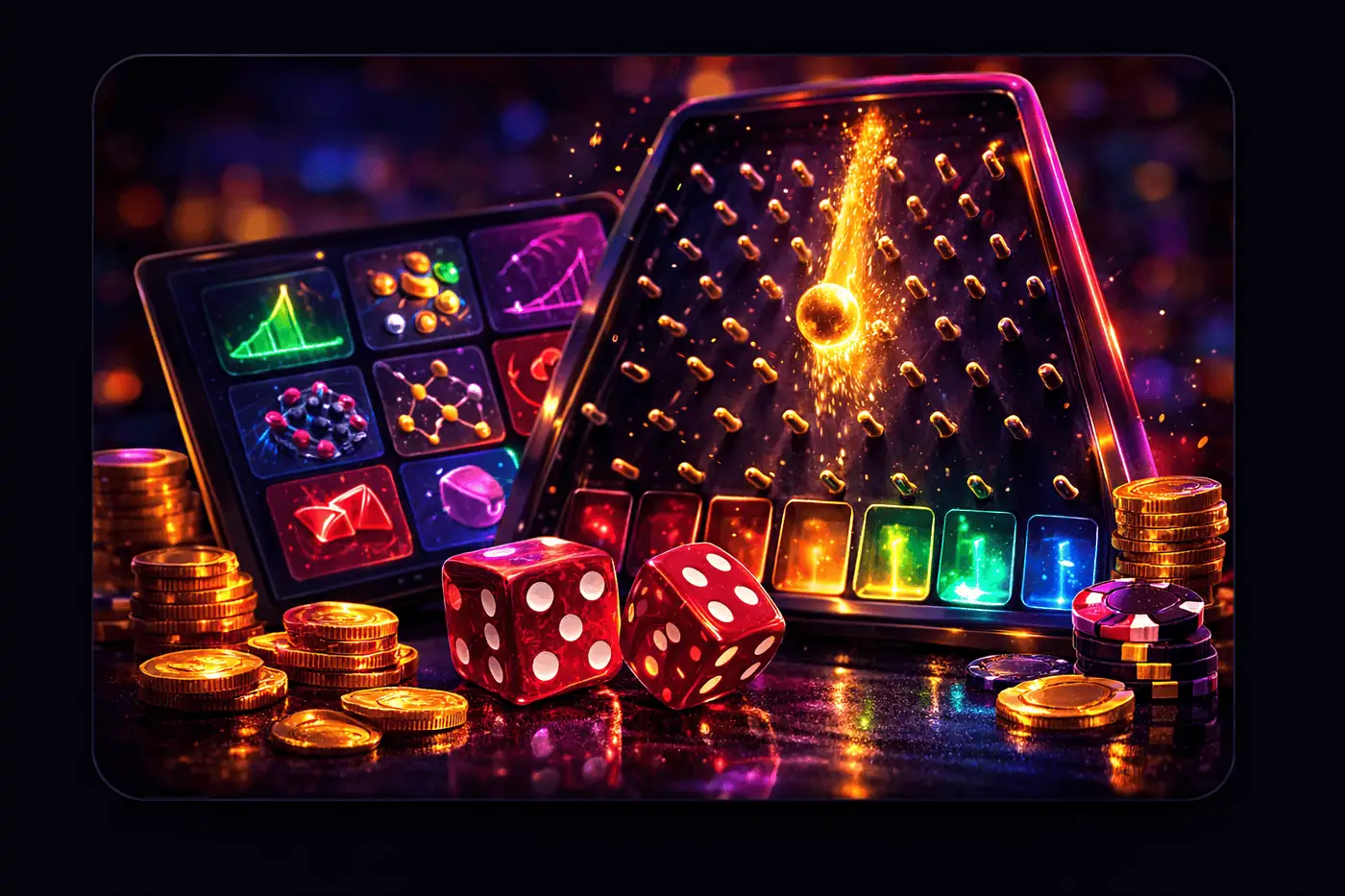
Arcade casino games are built around speed, simplicity, and direct player interaction. Instead of waiting for spins or dealer actions, these games deliver instant outcomes where every click directly affects risk and reward.
Most arcade games use multiplier-based systems or step-by-step decision mechanics, allowing players to control how aggressively they play. However, outcomes are still generated randomly, even if the gameplay feels interactive.
Many of these formats originated in crypto casinos, where transparency and provably fair systems became standard. To understand how fairness works in these environments, review the Casino Security Guide. For a full overview of casino game categories, see the Casino Game Types Guide.
3 games found
Sort by:
Latest added




Bitunix Exchange – 50% Deposit Bonus & 200x Futures Trading

Arcade Casino Games Explained: What They Actually Are
Arcade casino games represent a newer category of online gambling focused on instant interaction and high-frequency gameplay. Unlike traditional formats, these games remove complex rules and long animations, replacing them with fast decision loops and immediate results.
Most arcade games fall into one of two structures:
- Multiplier-based systems (Crash, Limbo, Dice)
- Step-based risk progression (Mines, Plinko)
These games are designed for speed. Rounds often last only a few seconds, allowing players to place multiple bets in a short time.
This high-frequency model is one of the reasons arcade games have grown rapidly in modern online casinos, especially in crypto environments .
Popular Arcade Game Types
Arcade games are not a single format. They include several distinct mechanics:
Crash
- Rising multiplier
- Cash out before crash
- Timing-based decisions
Plinko
- Ball drops through pegs
- Random bounce mechanics
- Multipliers based on landing position
Mines
- Grid-based game
- Avoid hidden traps
- Increasing multiplier with each safe pick
Dice
- Predict outcome ranges
- Adjustable probability vs payout
Limbo
- Choose target multiplier
- Instant win or loss
These formats share one thing:
👉 Simple rules + fast outcomes + high control illusion
Why Arcade Games Feel Different
Arcade games change how players experience gambling.
Compared to traditional casino games:
- No waiting for reels or dealers
- Immediate results
- Continuous gameplay loop
- Visible risk-reward decisions
This creates a more interactive experience where players feel more involved, even though outcomes remain random .
How Fairness Works in Arcade Games
Most arcade games rely on:
- RNG (Random Number Generators)
- Provably fair algorithms
- Pre-generated outcomes
This means:
- Results are determined before interaction
- No mid-game manipulation
- Verifiable fairness in many crypto environments
Crash-style systems, for example, generate a multiplier that will inevitably end at a random point, and players must exit before that happens .
For deeper verification systems, see the Provably Fair Casinos Guide.
Volatility and Risk in Arcade Games
Arcade games are typically high volatility by design.
- Faster rounds → more exposure
- Higher multipliers → higher risk
- Continuous betting → higher session intensity
Unlike slots or roulette, players actively choose how much risk they take per round.
Examples:
- Early exit → smaller but consistent results
- Late exit → higher payouts but higher loss probability
- Aggressive play → high variance sessions
This makes risk management more important than in most other casino categories.
Why Arcade Games Are Popular in Crypto Casinos
Arcade games gained popularity in crypto environments because they align with:
- Fast deposits and withdrawals
- Transparent mechanics
- Real-time interaction
- High engagement loops
They are designed for modern users who prefer fast gameplay cycles instead of long sessions.
You can explore platforms offering these formats in the Best Crypto Casinos section.
Arcade Games vs Traditional Casino Games
Arcade games sit in a different category compared to classic formats.
| Game Type | Speed | Player Control | Complexity |
|---|---|---|---|
| Slots | Medium | Low | Low |
| Roulette | Medium | Medium | Low |
| Blackjack | Medium | High | Medium |
| Arcade Games | Very High | Medium (perceived) | Very Low |
Arcade games are not simpler because they are easier to win. They are simpler because they reduce rules while increasing interaction.
What This Page Helps You Do
This category allows you to:
- Compare arcade game formats
- Understand multiplier mechanics
- Explore different providers
- Evaluate risk levels
- Choose games that match your play style
Arcade games are easy to start but difficult to manage without understanding volatility.
🔥 ARCADE MISTAKES, MYTHS & FAQ (COMBINED SECTION)
Arcade Game Mistakes, Myths & Real Answers
Arcade games create a strong illusion of control. Players feel like decisions influence outcomes directly, but in reality, results are still generated randomly.
Understanding this difference is critical.
Common Arcade Game Mistakes
- Playing too fast without control
High-speed rounds lead to rapid bankroll loss. - Chasing multipliers aggressively
Higher rewards always come with higher risk. - Believing patterns exist
Each round is independent. - Ignoring volatility
Arcade games produce strong winning and losing swings. - Playing emotionally under pressure
Fast gameplay increases impulsive decisions.
If you want to understand how bankroll pressure affects decision-making across casino games, review the Casino Bonus Guide.
Arcade Game Myths Explained
- “You can learn patterns in crash or mines”
False. All outcomes are RNG-based. - “Arcade games are skill-based”
They involve decisions, but outcomes remain random. - “Fast games are easier to win”
Speed increases volume, not advantage. - “Auto-play guarantees consistency”
It removes emotion, not randomness.
Arcade Game FAQ – Real Answers
What are arcade casino games?
They are fast-paced, simple casino games focused on instant results and multiplier-based mechanics.
Are arcade games based on luck or skill?
They are probability-based. Player decisions affect risk timing, not outcomes.
Why are arcade games so fast?
They are designed for short rounds and high-frequency gameplay, allowing many bets in a short session.
Are arcade games fair?
Most use RNG or provably fair systems to ensure outcomes are random and verifiable.
What is the most popular arcade game?
Crash, Plinko, and Mines are among the most widely played formats.
Are arcade games better than slots?
They offer more interaction and speed, but both rely on probability and include a house edge.
Can you win consistently in arcade games?
Short-term consistency is possible, but long-term results are influenced by variance and house edge.
Why do arcade games feel controllable?
Because players choose actions during gameplay, even though outcomes are pre-determined.
Is auto-play useful in arcade games?
It helps reduce emotional decisions but does not change probabilities.
What is the safest way to play arcade games?
Lower multipliers, controlled session length, and consistent bet sizing reduce risk.
Why are arcade games popular in crypto casinos?
They match fast transactions, transparency, and modern gameplay expectations.
Final Insight
Arcade games simplify casino mechanics while increasing speed and interaction. That combination creates engagement, but also increases risk if players do not understand how probability and volatility work.
Control in arcade games is about timing—not outcomes.