Casino Verification Guide 2026
Article OverviewCasino verification checks who owns an account and whether the required identity and payment information is complete. This guide explains which documents you may need, how to submit them, why requests get rejected and what to ask when a review stalls. It also separates identity approval from withdrawal approval and explains why requirements vary between operators.
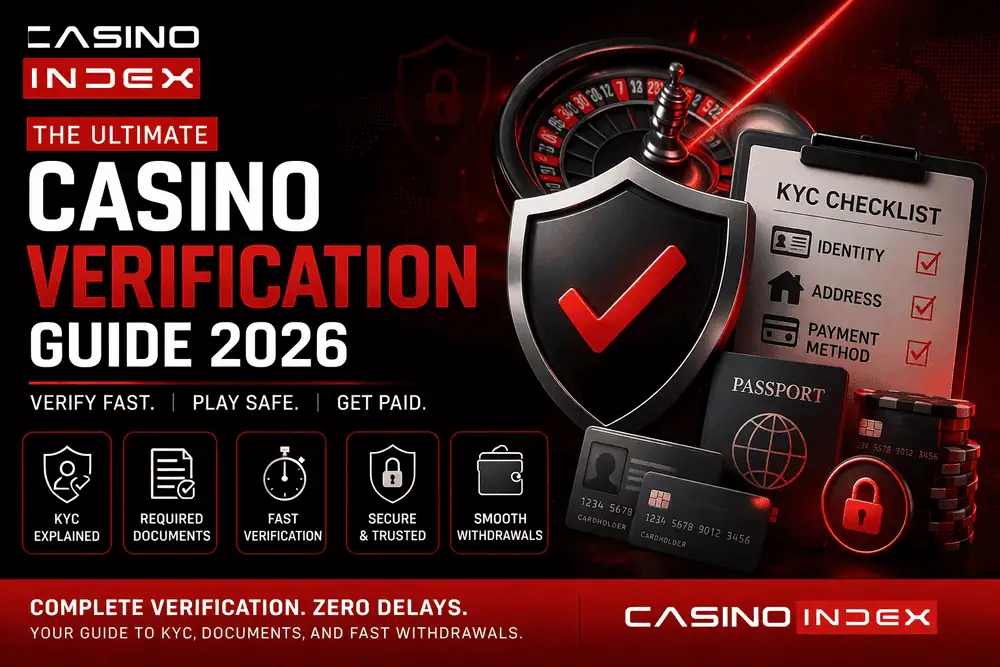
Casino verification can feel straightforward until a document is rejected without a useful explanation. Your passport might be accepted while your address check remains pending. Or the account may show “verified” even though a withdrawal still needs a separate review.
The next step depends on what the casino is checking. This guide explains how to identify the request, prepare the right documents and resolve common submission problems. It also shows why one operator’s document rules or review times should not be applied to every casino.
Before uploading anything: open the verification section through the casino’s official website or app. Check which document is requested, what information must remain visible and which upload channel the operator provides. Do not send extra identity or financial records simply because they might be useful later.
What Does Casino Verification Check?
KYC stands for “Know Your Customer.” In a casino account, identity verification establishes who the customer is. Related checks may confirm their address, payment ownership or the origin of money deposited.
These checks answer different questions. Knowing which one is outstanding helps you avoid sending the same passport repeatedly when the actual problem concerns a bank account or address document.
| Check | Question it answers | Possible evidence |
|---|---|---|
| Identity and age | Who is the account holder, and do they meet the applicable age requirement? | An accepted identity document; sometimes a selfie or live camera check. |
| Address | Does the customer’s residential address match their account information? | An accepted statement, bill or official letter. |
| Payment ownership | Does the relevant payment account or method belong to the customer? | Bank, card, e-wallet or crypto transaction records appropriate to the request. |
| Source of funds | Where did the money connected to the account activity come from? | Income or transaction records covering the requested period. |
An identity check does not decide every condition attached to a withdrawal. Bonus restrictions, payment routing and other account reviews can remain outstanding after ID approval. Our guide to casino withdrawal approval checks explains that wider process.
When Should Casino Verification Happen?
The timing depends on the applicable rules and the operator’s account process. Some identity checks happen electronically during registration. Other situations require documents, and further checks may become necessary later.
Do not assume that verification appearing at a first withdrawal is acceptable everywhere. For online operators covered by the UK Gambling Commission’s customer identity verification condition, identity information must be verified before the customer is allowed to gamble.
The same condition prevents an operator from making a withdrawal dependent on information it could reasonably have requested earlier. It allows for information that becomes necessary at that point because of another legal obligation.
Those are jurisdiction-specific requirements. An offshore licence or an accessible website does not establish that the same protections apply to your account.
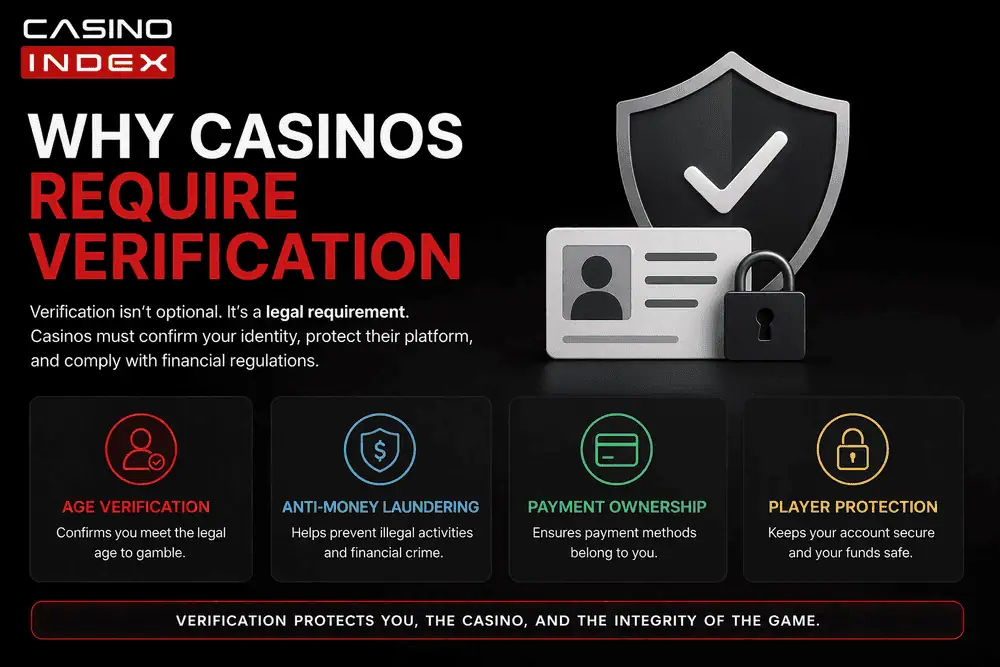
Can a verified account be checked again?
Yes. A later request may concern an expired document, a changed address, another payment method or a different type of review. It does not necessarily mean the original identity check failed.
Ask what has changed and which part of the account needs attention. There is no universal transaction amount below which further checks can never happen.
Which Documents Do You Need for Casino Verification?
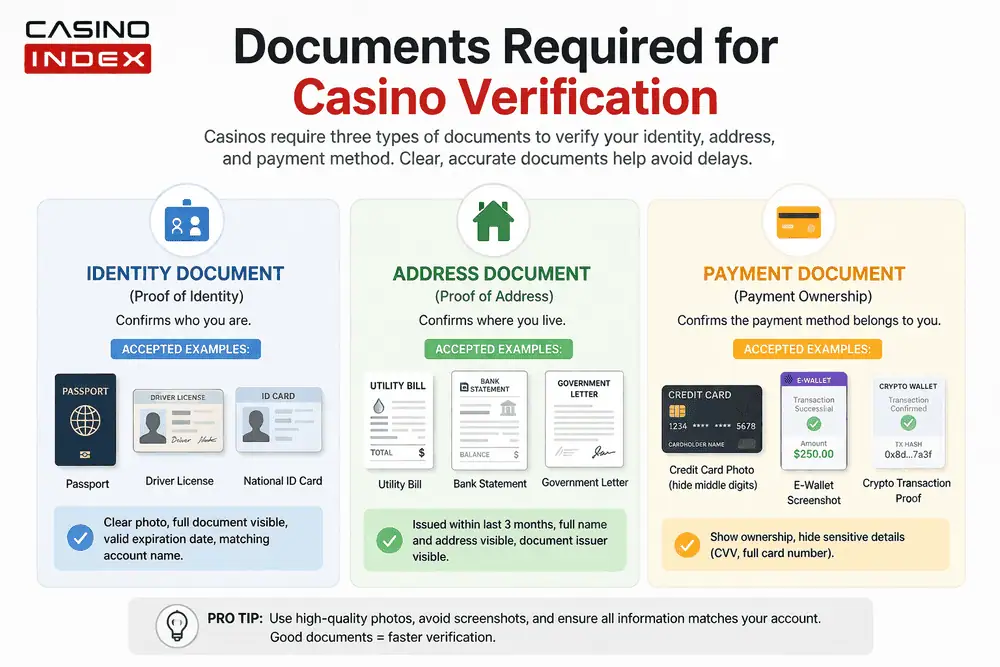
Start with the operator’s accepted-document list. A document can be genuine and still be unsuitable for a particular check because of its format, issue date or missing information.
Prepare only the categories requested. Some operators can confirm certain details electronically, so every customer will not necessarily need to upload the same set of files.
Proof of identity
Accepted options may include a passport, national identity card or driving licence. Check whether the operator requires both sides, a photograph of the physical document or a particular period of remaining validity.
For example, Stake’s identity-document guidance specifies original colour photographs and at least three months of remaining validity. Its rules also distinguish photographed documents from screenshots and digital documents. These are that operator’s requirements, not a universal checklist.
Before uploading, enlarge the image on your screen. Check the name, date of birth, expiry date and document edges. If glare hides a detail, retake the photograph rather than trying to reconstruct or digitally alter it.
Proof of address
An address document generally needs to connect your name with your residential address and show its issuer and issue date. Possible options include a bank statement, utility bill or an accepted official letter.
Read the permitted document age carefully. The three-month limit mentioned in many guides is not universal. Stake’s proof-of-address instructions, for example, specify documents issued within six months and accept original photographs or PDFs while excluding screenshots.
If you recently moved, ask how to update the account and which evidence is accepted. Do not alter an old statement to display a new address.
Payment ownership evidence
The required evidence should relate to the payment method being checked. A bank-account ownership request differs from a card-image request or a question about an e-wallet profile.
For a card image, obtain the operator’s masking instructions before uploading. Do not include the CVV or CVC security code in an identity-document submission. Ask which card digits must remain visible and whether another ownership document is accepted.
For an e-wallet, confirm which account details the evidence must show. A transaction screenshot without the account holder’s information may not answer an ownership question.
Selfies and live camera checks
A casino or its verification provider may ask you to take a selfie or complete a live camera check. Follow the instructions inside the confirmed verification flow; a saved selfie may not satisfy a live check.
If the camera step fails, check browser permissions and the provider’s device requirements. Ask for an accessible alternative if you cannot complete the requested process. Never use another person or an altered image to get past it.
How to Complete the Casino Verification Process
1. Read the actual request
Identify the outstanding category and any rejection message already provided. “Account verification incomplete” is too broad to tell you which file to replace.
Check the requested document type, file format, maximum file size and whether both sides or multiple pages are needed. Save the instructions so you can refer to them if support later gives different advice.
2. Resolve account-detail differences
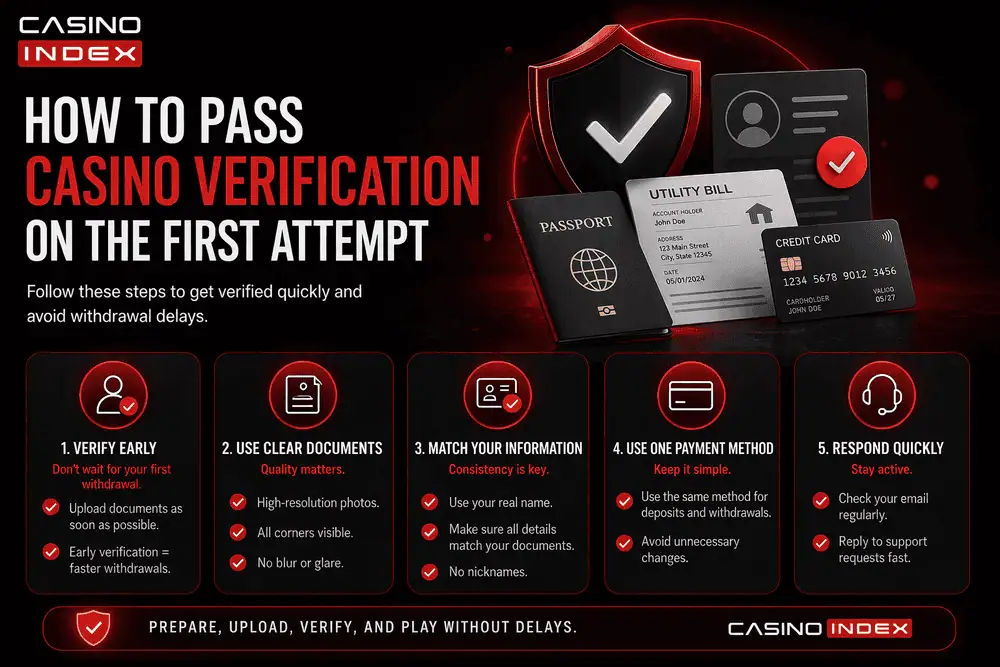
Use your legal details in the identity fields. A public username can differ from your legal name; the important comparison is between the verification record and your documents.
If a middle name, accent, transliteration or recent name change creates a mismatch, ask support how to correct it. Do not open another account or change details repeatedly to test what the system accepts.
A marriage certificate or other name-change evidence may be appropriate if the operator requests it. First confirm what is needed.
3. Prepare a readable, accepted file
Use even lighting, keep the document flat and avoid reflections. Include the required edges and pages. For a statement, use the original download if that format is accepted.
Do not apply beauty filters, erase transactions or replace text. Redaction and watermarking can affect acceptance, so ask before changing a file. An operator-approved card masking instruction is different from altering identity information.
4. Upload through the confirmed verification channel
Open the casino directly and navigate to the account area. If it uses an external verification provider, confirm that provider through the official account flow or support channel.
A padlock icon alone does not establish that a website belongs to the right business. Be cautious about unsolicited document requests sent through social media, messaging accounts or lookalike domains.
Our guide to a safe casino KYC process covers document handling and the signs of an unreasonable request in more detail.
5. Check the submission result
Look for confirmation that the upload completed. Keep the submission time, case reference and status message. You do not need to copy sensitive documents into an unprotected notes app to keep this record.
If the page says “received” or “under review,” that is different from “approved.” If it says “rejected,” read the reason before resubmitting. Sending several different versions without understanding the problem can make the conversation harder to follow.
How Long Does Casino Verification Take?
There is no dependable industry-wide deadline. Electronic identity matching, a document review and a more detailed financial check are different processes.
The UK Gambling Commission’s consumer verification guidance explains that electronic checks may be immediate while document checks take longer. It does not provide one timescale covering every case.
Published operator examples
Sky Betting & Gaming’s help page gives a four-hour document-review target, allowing up to 24 hours in some cases and explaining its verification-team opening hours.
By comparison, the Monopoly Casino US help page describes a review taking up to 72 hours, with a possible additional period before a pending withdrawal is released.
These are published examples for those services, not CasinoIndex test results or targets for other casinos. Check the policy that applies to your account and whether its estimate begins at upload or after all required evidence has been received.
Read the status before counting the hours
| Status shown | What to establish | Useful next step |
|---|---|---|
| Upload incomplete | Whether the file reached the verification system. | Check the upload error and accepted format before trying again. |
| Received or pending | Whether all requested documents have arrived. | Check the stated review window and any missing-document message. |
| Rejected | Which document failed and why. | Correct that specific issue or ask for an accepted alternative. |
| Identity approved | Whether address, payment or other checks remain open. | Ask which outstanding check prevents the account from proceeding. |
| Additional review | Whether the request concerns identity, payment ownership or financial information. | Ask what evidence is needed and when to expect the next update. |
Clear documents cannot control a compliance queue, a provider outage or an operator’s handling of the case. A delay is not automatically the customer’s fault.
Why Were Your Casino Verification Documents Rejected?
A rejection should lead to a specific correction. “Verification failed” does not tell you whether the problem is an unreadable image, an unsupported document or a difference in account information.
| Problem | What to check | Next step |
|---|---|---|
| Blur, glare or missing edges | Whether all requested details are readable. | Retake the photograph with even lighting and the complete document visible. |
| Expired or nearly expired ID | The operator’s remaining-validity requirement. | Use another accepted document or ask about alternatives. |
| Address document rejected | Accepted type, issue date, name, address and issuer. | Ask which requirement failed before selecting a replacement. |
| Name does not match | Legal-name fields, spelling and any documented name change. | Request a profile correction through support. |
| Screenshot or file rejected | Whether that format is accepted for this document category. | Use the permitted original photograph, PDF or other specified format. |
| Payment ownership unclear | Whether the evidence identifies the account holder and relevant method. | Request the exact ownership evidence needed. |
If you do not have a utility bill
Ask for the complete list of address alternatives. Depending on the operator, an accepted bank statement, tax letter, tenancy document or institutional letter may work.
Explain your circumstances if you live with family, rent a room or recently moved. Someone else’s bill does not automatically establish your address. Do not add your name to it or use another person’s identity documents.
If the same document keeps getting rejected
Ask for a manual explanation that identifies the failed requirement. Mention what changed between the first and second submission so the reviewer can follow the history.
For example: “The replacement image includes all four corners and the expiry date is readable. Is the remaining issue image quality, document type or an account-detail mismatch?”
If an automated process cannot handle your document or circumstances, request an alternative review route rather than continuing to submit identical files.
Casino Verification With Crypto Payments
Paying with crypto does not establish your identity. An operator may separately ask for identity documents, evidence connecting you to a payment account or records explaining a deposit.
A transaction hash identifies a blockchain transaction. By itself, it does not prove the legal identity of the person who controlled the sending wallet. A screenshot of a public block explorer has the same limitation.
Exchange accounts and personal wallets
If you deposited from an exchange, keep the relevant withdrawal record from your own exchange account. Explain that route if the casino asks about an address controlled by the exchange rather than directly by you.
For a personal wallet, ask what evidence the operator accepts. Never provide a seed phrase, private key or password. Do not approve an unfamiliar wallet transaction simply because someone calls it “verification.”
The separate guide to crypto casino wallet checks covers wallet-control questions and payment records in more depth.
What if the casino advertises “no KYC”?
Read the circumstances in which its terms permit later checks. A registration process without document uploads does not tell you everything about future account reviews.
For the differences between those models, see no KYC versus low KYC casinos. Do not change your identity, location or transaction pattern to evade a verification requirement.
Why Might a Casino Ask for Financial Documents?
An identity document answers who you are. It does not explain where a particular deposit came from. A source-of-funds request concerns that funding question; a source-of-wealth review concerns how a person accumulated their broader assets.
This distinction is explained in HMRC’s source-of-funds and source-of-wealth guidance. It helps clarify the terminology, but does not make every financial-document request appropriate for every account.
If you receive a request, ask which period and transactions it covers. A salary-funded deposit, an asset sale and an exchange withdrawal may require different records. An account balance alone may not explain the origin of the money.
Financial checks connected with gambling-harm prevention can have a different purpose again. Ask which review is underway instead of treating every request for a bank statement as another ID check.
Our guide to source-of-funds checks at online casinos explains the evidence in detail.
What to Do When Verification Stalls
Start by checking whether the stated review period has passed and whether the operator is waiting for you. Look in the account area as well as your email, including the spam folder.
Then contact support with the submission date, case reference and current status. Keep the message focused on the unresolved step.
I submitted the requested documents on [date and time]. My account currently shows [status]. Please confirm which checks are complete, whether anything is still missing and when I should expect the next update. If a document was rejected, please identify the reason and the accepted replacement.
Keep a short case record
- The date and time of each submission.
- The document category requested, without copying sensitive details into the record.
- Any rejection reason and the change made in response.
- The case number and support replies.
- The withdrawal reference, if a payment is affected.
Save sensitive files securely and do not publish them in review comments or public forums. When sharing evidence of a dispute, remove identity details, account numbers and other private information.
If support cannot resolve the issue
Ask for the operator’s formal complaints procedure and submit a clear written complaint. Explain the unresolved request, what you have supplied and the outcome you are seeking.
For relevant disputes with UKGC-licensed businesses, the Commission explains the route to an Alternative Dispute Resolution provider after eight weeks, or earlier where the business issues a final response or reaches deadlock. That process is not a universal remedy for every offshore casino.
A review delay does not establish fraud. However, requests for passwords, private keys or an unexplained payment to “unlock” verification should not be followed. Confirm suspicious messages through the operator’s official channel.
Why Is a Withdrawal Still Pending After Verification?
First ask whether “verified” refers only to identity. Address confirmation, payment ownership or another account review may still be incomplete.
If all required verification is complete, ask whether the withdrawal has been approved and sent. An internal payout decision and the receiving bank or wallet’s processing time are separate stages.
You do not need to resend your passport unless there is a clear reason for doing so. The useful question is: “Which remaining step is preventing this withdrawal from being released?”
Our casino withdrawal guide explains the payment stages. Completing KYC does not guarantee that every later withdrawal will be immediate.
A Final Check Before Uploading Documents
- Correct request: you know which verification category is outstanding.
- Accepted evidence: the document meets the stated type, date and format requirements.
- Readable file: required information and document edges are visible.
- Accurate details: any account mismatch has been raised with support.
- Confirmed channel: you reached the upload process through the official account or a verified provider.
- Submission record: you can identify when the file was sent and what status followed.
These steps make a submission easier to review. They cannot guarantee approval, protect against every operator failure or remove other withdrawal conditions.
CasinoIndex’s rating methodology considers verification handling alongside wider trust and payment evidence. A casino asking for documents is not, by itself, proof that the business is reliable.
Casino Verification FAQ
Does every player have to upload documents?
Not necessarily. Some identity details can be verified electronically. Document requests depend on the applicable rules, available checks and the account’s circumstances. A completed registration form alone does not prove that verification is finished.
Can I use screenshots for casino verification?
Only where the operator accepts them for that document category. The rules for an identity photo can differ from those for an address statement or e-wallet record. Check before converting an original document into a screenshot.
What if my ID is valid but expires soon?
Check the required remaining validity. A document that has not yet expired can still fall outside an operator’s stated acceptance rules. Ask whether another ID is accepted if renewal is not immediately available.
Can I verify before making a deposit?
Some operators provide this option or require identity checks before play. Ask what can be completed before funding the account. Do not make a deposit merely to test whether a document will be accepted.
Can I refuse to provide a requested document?
You can ask why it is required and whether an alternative is accepted. If a required check cannot be completed, account access or withdrawals may remain restricted. How existing funds must be handled depends on the applicable rules and circumstances; refusal does not have one universal outcome.
Does a second document request mean the casino is avoiding payment?
Not necessarily. It may address information missing from the first submission or a separate check. Look at the specific request, the explanation and the progress of the case. Repeated vague demands warrant a clearer written response and, where necessary, a formal complaint.
Is a verified casino account guaranteed to receive withdrawals?
No. Identity approval completes one part of the account process. Payment checks, applicable terms and the operator’s reliability still matter. Keep verification status separate from the status of an individual withdrawal.
Gambling involves a risk of losing money. Identity verification does not change the odds or make gambling a source of income. Only participate where permitted and if you meet the applicable age requirement.

Maria Hoffmann has worked in cryptocurrency content and digital publishing since 2017. She is a co-founder of Freecoins24 and CryptoMutant and has covered blockchain projects, crypto platforms and emerging industry trends for several years. She has also been active as a cryptocurrency investor since 2019. At CasinoIndex, Maria combines content research and SEO experience with a focus on casino trust, platform security, withdrawal processes, payment risks and user protection. Her work looks beyond bonuses and product features to examine how gambling platforms handle player funds, verification and account-related risks.