Why Casinos Delay Withdrawals: What Really Happens When You Try to Cash Out
Introduction – The Only Moment That Actually Matters
Most casino content focuses on bonuses, games, or design. None of that matters when real money is on the line.
The only moment that defines a platform is simple:
when you try to withdraw.
Everything before that feels smooth by design. Deposits are instant, gameplay works, rewards look attractive. That part is easy. The real test starts when money needs to leave the system.
If you step back and compare how different platforms behave once payouts are involved, especially across environments known for long-term stability and real user feedback inside the broader crypto casino ecosystem, a clear pattern appears:
- withdrawals are fast at low levels
- friction increases with volume
- systems react once risk changes
This is not random behavior.
It is built into how casinos operate.
The Core Truth – A Withdrawal Is a Risk Event
From a player perspective, a withdrawal is a simple request.
From a casino perspective, it is the exact opposite.
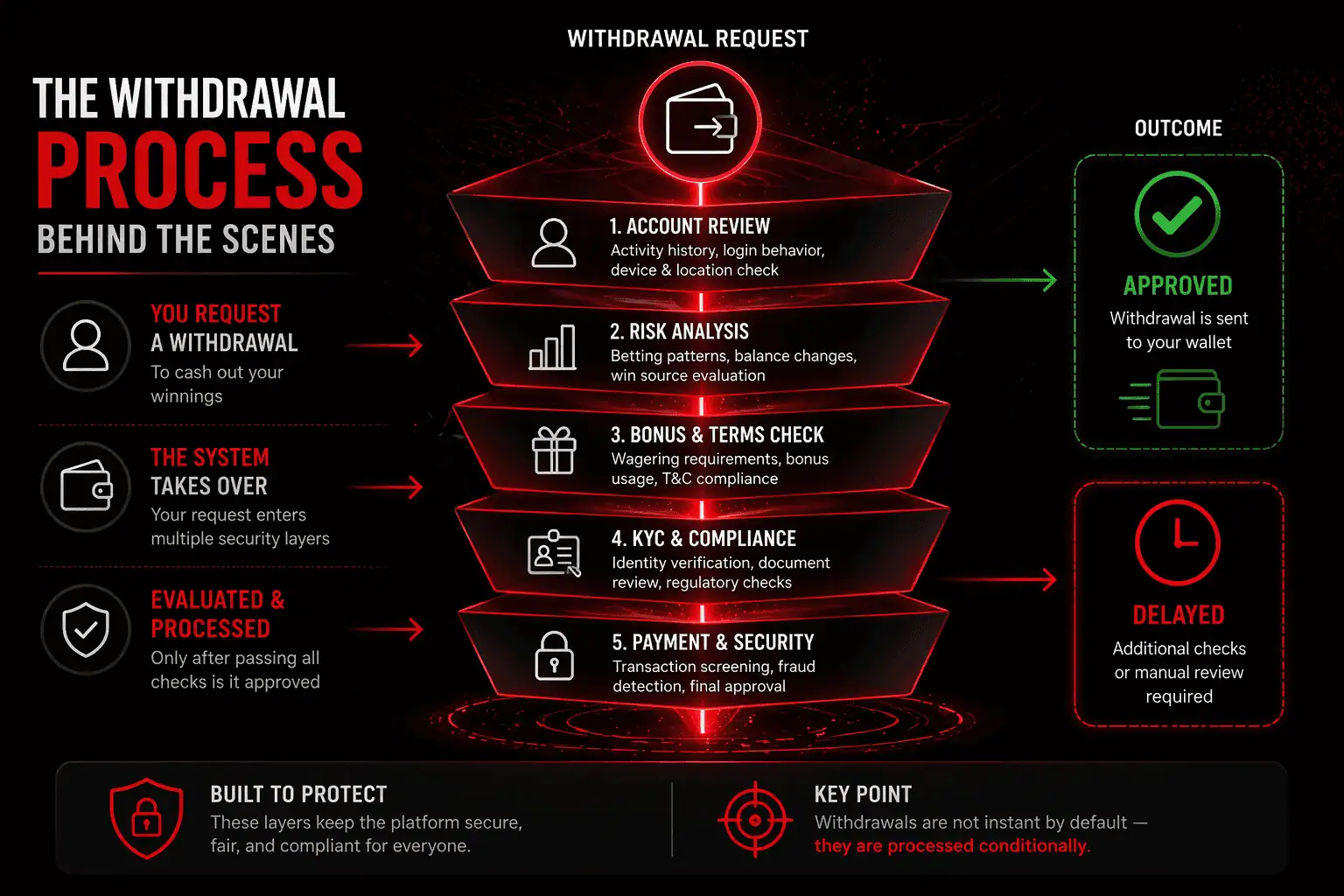
The moment you request a payout, the system shifts from engagement to protection. Multiple layers start evaluating your account at the same time:
- activity history
- betting patterns
- bonus interaction
- transaction flow
- compliance exposure
That is why two platforms that feel identical during gameplay can behave very differently during withdrawals.
If you look at real-world comparisons where platforms are tested under pressure instead of surface-level features, the difference becomes obvious in breakdowns like this side-by-side analysis of Stake and BC.Game under real payout conditions.
The key point most players miss:
withdrawals are not processed automatically — they are processed conditionally.
Reason 1 – Risk Management Always Comes First
Why things change when you start winning
Casinos do not react the same way to every user.
The system behaves differently depending on one factor:
risk exposure.
- deposits = no risk
- losses = profit
- wins = exposure
The moment you win and try to withdraw, the platform needs to protect itself.
This is where internal systems activate.
How casinos actually measure risk
Risk is not based on one action. It is based on patterns.
Common triggers include:
- sudden increases in bet size
- rapid balance growth
- large withdrawal requests
- irregular gameplay behavior
- bonus-heavy activity
The more signals appear at once, the more likely the system is to slow things down.
That is why players often say:
“everything worked fine until I tried to withdraw.”
That is not coincidence.
That is how the system is designed to react.
Why larger platforms feel stricter
Bigger casinos operate differently from smaller ones.
Platforms like Stake or Cloudbet handle massive volume. That gives them:
- strong liquidity
- fast baseline payouts
- stable infrastructure
But it also forces them to use:
- automated risk detection
- stricter compliance layers
- deeper monitoring systems
This creates a clear trade-off:
the smoother the experience at the start, the tighter the system under pressure.
Reason 2 – Verification and Compliance Checks
Why KYC appears “out of nowhere”
Many players misunderstand how verification works.
They assume:
“If I can deposit without verification, I should be able to withdraw the same way.”
That is not how casinos operate.
Most platforms delay verification until it becomes necessary.
When verification actually gets triggered
Verification usually appears when:
- withdrawal size increases
- account value crosses thresholds
- behavior changes suddenly
- compliance rules require it
This means small withdrawals often go through without issues, while larger ones trigger checks.
If you want to understand why this happens and how platforms apply these checks in practice, it helps to look at how identity verification is introduced during withdrawals and why accounts get flagged at specific points in this deeper explanation of how casino verification systems actually work.
Why this creates delays
Verification is not instant.
It involves:
- document submission
- manual or automated review
- approval workflows
During that time, withdrawals may appear as:
- pending
- delayed
- temporarily restricted
From the outside, this looks like a problem.
From the inside, it is standard procedure.
Reason 3 – Bonus Systems Create Hidden Friction
The part most players ignore
Bonuses are one of the biggest reasons withdrawals get delayed.
Not because they are scams.
But because they come with conditions.
What actually causes the problem
Most bonus systems include:
- wagering requirements
- restricted game contributions
- maximum bet limits
- withdrawal conditions
The issue is not the existence of these rules.
It is how they interact with real money.
If you break even one condition, the system reacts.
How this affects withdrawals
Common outcomes:
- withdrawals get paused
- balances get adjusted
- winnings become restricted
This is why bonus-heavy platforms often feel more complicated during payouts.
If you compare systems built around layered rewards versus simpler structures, like those seen on platforms such as Shuffle versus more traditional environments like BitStarz, the difference becomes clear:
- more rewards → more conditions
- more conditions → more friction
Why experienced players approach this differently
Players who understand the system usually:
- avoid aggressive welcome bonuses
- prefer cashback or rakeback models
- focus on withdrawable value
Because they know:
a bonus only matters if you can actually cash it out.
Reason 4 – Payment Systems and Processing Layers
Why “instant” withdrawals are not always instant
Crypto casinos are often marketed as instant.
And technically, they can be.
But the blockchain is only one part of the process.
Before a transaction is sent, the platform still needs to approve it.
Where delays actually happen
The full withdrawal flow looks like this:
- internal system review
- risk and compliance checks
- approval or manual verification
- transaction broadcast
- blockchain confirmation
Delays usually happen before step 4.
Not after.
Why payment structure matters
Different platforms handle payments differently.
Some prioritize:
- speed
- automation
- low friction
Others prioritize:
- control
- compliance
- risk protection
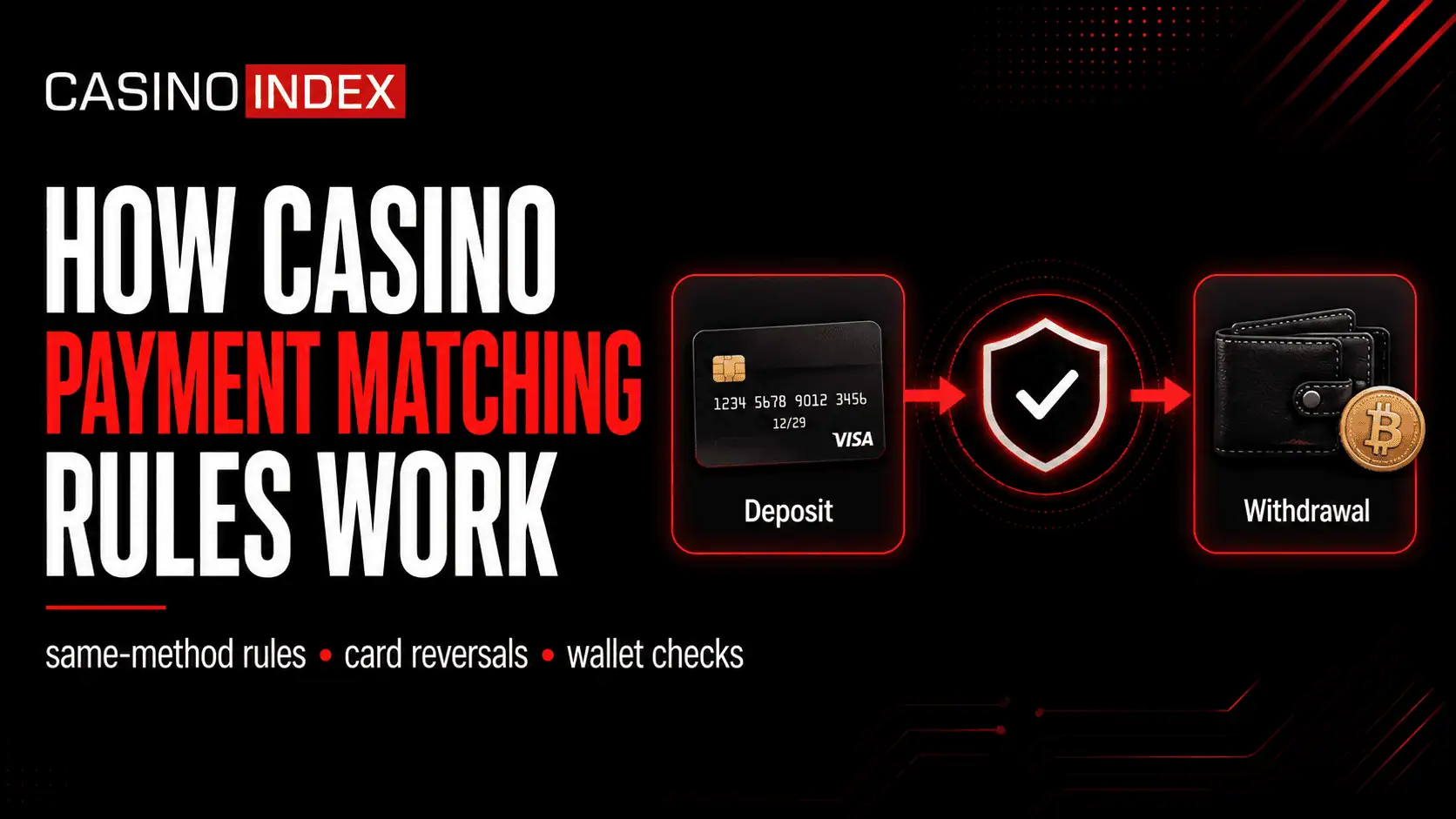
If you look deeper into how different methods behave across platforms and why certain withdrawals move faster than others, this becomes clearer when you break down how crypto payments, processing queues, and internal approval systems interact inside modern casinos, as explained in this overview of how casino payment systems actually work in practice.
Interim Conclusion – Nothing About Delays Is Random
At this point, the pattern is clear.
Withdrawals are delayed because of:
- risk management
- verification systems
- bonus conditions
- internal processing layers
Not because platforms randomly decide to block users.
The real difference between casinos is not whether delays happen.
It is:
- how predictable they are
- how often they appear
- how clearly the system behaves under pressure
The Layer Most Articles Miss – Behavior Changes Everything
At a surface level, most casinos look similar.
They offer the same games.
>They support the same coins.
>They promise fast withdrawals.
That similarity disappears the moment behavior changes.
Because withdrawals are not evaluated in isolation.
They are evaluated in context.
This is the part most players never see coming.
A platform that feels smooth during normal play can behave very differently when:
- betting volume increases
- win size changes
- withdrawal frequency rises
- account patterns shift
If you compare how platforms react once real usage begins—especially in scenarios where systems are tested under pressure instead of marketing conditions—the difference becomes clear in breakdowns like how Stake and Shuffle behave across repeated withdrawals and long-term usage.
The key insight:
casinos don’t react to actions — they react to patterns.
Trigger 1 – Sudden Balance Growth
Why big wins change everything
One of the most common triggers is simple:
your balance increases faster than expected.
From a player perspective, that is success.
From a system perspective, that is a risk signal.
What the system sees
When your balance grows quickly, the system evaluates:
- how the winnings were generated
- whether betting behavior changed
- if bonus mechanics were involved
- how the account behaved before the win
This is where delays often begin.
Real-world pattern
Players often report:
- instant withdrawals at small levels
- delays after a large win
- verification requests after profit spikes
This pattern is consistent across platforms.
If you look at how different casinos handle scaling payouts—especially when comparing structured environments like Gambear vs BC.Game under different usage patterns—you will notice that the system becomes more reactive as exposure increases.
Trigger 2 – Changes in Betting Behavior
Why consistency matters more than strategy
Casinos do not judge whether you win.
They evaluate how you play.
A sudden change in behavior is often more important than the outcome itself.
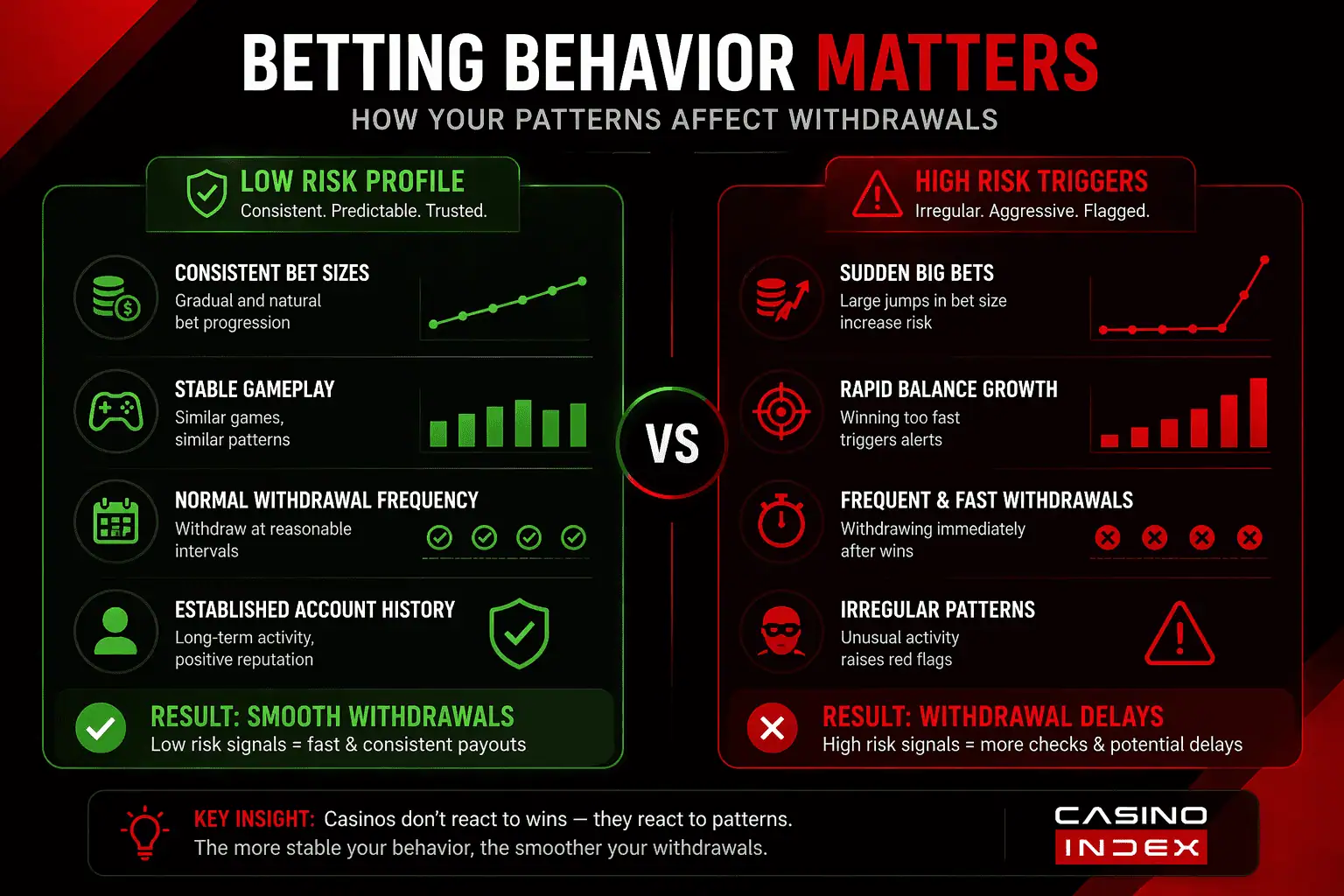
Common behavioral triggers
- switching from low bets to high bets quickly
- moving between different game types
- increasing bet size after losses
- rapid gameplay changes
These patterns signal potential risk.
Not because they are illegal.
But because they deviate from normal usage.
Why this leads to delays
When behavior changes, the system needs to verify:
- whether the activity is legitimate
- whether bonuses are being exploited
- whether automation or external tools are involved
This slows down withdrawals.
Why experienced players avoid this
Players who understand system behavior usually:
- increase volume gradually
- maintain consistent patterns
- avoid sudden changes after wins
Because they know:
consistency reduces friction.
Trigger 3 – Withdrawal Frequency and Timing
Why frequent withdrawals can create friction
Most players assume more withdrawals = better control.
In practice, frequent withdrawals can trigger additional checks.
What the system evaluates
- how often you withdraw
- how quickly you withdraw after winning
- how your withdrawal pattern compares to deposits
If withdrawals appear irregular or too frequent, the system reacts.
Example scenarios
Scenario A:
- deposit → play → withdraw occasionally
→ low friction
Scenario B:
- deposit → win → withdraw immediately → repeat multiple times
→ higher scrutiny
Why timing matters
Casinos expect natural usage patterns.
When behavior becomes too optimized or repetitive, it triggers internal flags.
This is especially visible on platforms with layered reward systems, where interaction between bonuses and withdrawals becomes more complex, as seen in environments like BC.Game vs Shuffle under reward-driven activity.
Trigger 4 – Bonus Interaction Patterns
Why bonuses amplify system sensitivity
Bonuses do not just add value.
They add complexity.
Every bonus introduces rules.
>Every rule creates conditions.
>Every condition creates potential triggers.
High-risk bonus behaviors
- using bonuses immediately after deposit
- switching games to maximize contribution
- placing high bets near completion
- withdrawing right after wagering ends
These patterns increase scrutiny.
Why this delays withdrawals
The system needs to confirm:
- wagering requirements were met correctly
- no restricted strategies were used
- no bonus abuse occurred
Until that is confirmed, withdrawals may be paused.
What this looks like in practice
Players often experience:
- pending withdrawals after bonus completion
- manual reviews
- balance adjustments
This is not unusual.
It is part of how bonus systems are enforced.
Trigger 5 – Account History and Reputation
Why your past activity matters
Casinos do not evaluate accounts in isolation.
They evaluate history.
What affects account reputation
- previous withdrawals
- past verification status
- long-term activity patterns
- support interactions
Accounts with consistent history usually experience fewer delays.
Why new accounts face more friction
New accounts lack data.
That means:
- higher uncertainty
- higher verification probability
- more cautious processing
This is why newer platforms or accounts often feel less predictable compared to established environments like Bitcasino or Sportsbet.io, where long-term usage patterns are more clearly defined.
Trigger 6 – Liquidity and Internal Processing Limits
Why payouts depend on more than your balance
Even in crypto environments, liquidity matters.
Casinos do not always process all withdrawals instantly at scale.
What affects liquidity
- platform size
- active user volume
- coin availability
- internal treasury management
Large platforms usually handle this better.
Smaller platforms may:
- queue withdrawals
- process in batches
- delay large payouts
Why this is rarely explained
Casinos do not openly highlight liquidity constraints.
But they exist.
If you compare how different platforms behave during high-volume periods—especially across environments listed in fast payout-focused casino platforms—you will notice differences in how consistently withdrawals are processed under load.
Trigger 7 – Security Systems and Fraud Detection
Why every withdrawal is checked for risk
Every withdrawal passes through security systems.
These systems detect:
- unusual behavior
- potential fraud
- automated activity
- multi-account patterns
What can trigger security flags
- using multiple devices or IPs
- rapid login changes
- suspicious transaction patterns
- shared account signals
Why this causes delays
Security systems prioritize protection over speed.
If something looks unusual, the system pauses the process.
This is not optional.
It is required.
Understanding this layer properly
Most players only see the result.
To understand the cause, it helps to look at how casinos structure security systems, how accounts get flagged, and why certain behaviors trigger deeper checks, as explained in this breakdown of how casino security and risk systems operate in practice.
Real Usage Breakdown – Casual vs High-Volume Players
Casual Player Experience
Typical behavior:
- small deposits
- moderate gameplay
- occasional withdrawals
Result:
- minimal friction
- fast processing
- smooth experience
High-Volume Player Experience
Typical behavior:
- larger deposits
- higher bets
- frequent withdrawals
Result:
- increased checks
- more verification
- variable processing speed
Why the experience diverges
Casinos are optimized for:
- stable, predictable usage
They are not optimized for:
- rapid scaling
- aggressive optimization
- high-frequency withdrawal patterns
That is where friction appears.
The Key Insight – Systems React to Pressure
At this stage, one thing becomes clear.
Casinos do not behave differently by accident.
They behave differently under pressure.
What “pressure” actually means
Pressure is not one action.
It is a combination of:
- volume
- timing
- behavior
- risk signals
The more pressure increases, the more the system reacts.
The Final Layer – You Can Control More Than You Think
By now, the pattern is clear.
Withdrawals are delayed because of:
- risk signals
- verification triggers
- bonus conditions
- behavioral patterns
- system pressure
But here is the part most players never realize:
you can influence almost all of these factors.
Delays are not completely avoidable.
But they are highly predictable.
And once you understand how the system reacts, you can structure your activity in a way that reduces friction significantly.
How to Avoid Withdrawal Delays (Practical Strategy)
1. Keep Your Behavior Consistent
The fastest way to trigger delays is inconsistency.
Sudden changes create uncertainty.
Avoid:
- jumping from low bets to high bets instantly
- switching strategies aggressively
- changing gameplay patterns after winning
Instead:
- increase volume gradually
- maintain similar bet sizing
- keep your activity stable
Consistency lowers risk signals.
2. Do Not Rush Withdrawals After Winning
This is one of the biggest mistakes.
Winning and instantly withdrawing large amounts creates a strong trigger.
Instead:
- withdraw in structured amounts
- avoid immediate full cashouts after spikes
- space withdrawals over time
This aligns your behavior with normal usage patterns.
3. Understand Bonus Conditions Before You Play
Most withdrawal issues tied to bonuses come from one problem:
players don’t read the rules.
Before using any bonus, understand:
- wagering requirements
- restricted games
- max bet limits
- withdrawal caps
If you don’t, the system will enforce them later.
To avoid this, it helps to understand how bonus structures actually affect real payouts and why certain rewards create more friction than others, especially when comparing different models inside the broader casino bonus ecosystem.
4. Complete Verification Early (If You Plan to Scale)
If you intend to:
- play at higher stakes
- withdraw larger amounts
- use a platform long-term
then delaying verification is a mistake.
Instead:
- verify your account early
- submit documents before large withdrawals
- remove friction in advance
This prevents delays when it matters most.
5. Use Stable Payment Methods
Not all payment setups behave the same.
To reduce friction:
- use consistent wallets
- avoid switching networks frequently
- stick to one transaction pattern
If you want to understand how deposit and withdrawal flows interact with wallets, networks, and internal processing layers, it becomes clearer when looking at how crypto transactions are structured across platforms in this breakdown of how to move funds efficiently in crypto casinos.
6. Avoid High-Risk Patterns
Certain behaviors always increase scrutiny:
- multi-account usage
- VPN/location inconsistencies
- abnormal session activity
- rapid in-and-out transactions
Even if unintentional, these patterns trigger security systems.
Avoiding them reduces delays significantly.
Choosing the Right Casino for Fast Withdrawals
Not all platforms are built the same.
Some prioritize:
- speed
- simplicity
- predictable payouts
Others prioritize:
- engagement
- bonuses
- retention systems
The difference matters.
If Your Priority Is Fast Withdrawals
Look for platforms with:
- clean reward structures
- fewer bonus layers
- strong payout history
These are usually found among casinos known for consistent performance under real usage, especially those highlighted in environments focused on fast and reliable crypto withdrawals.
If Your Priority Is Long-Term Value
Reward-driven platforms can offer more value over time.
But they come with:
- more conditions
- more system interaction
- higher complexity
This is where understanding trade-offs becomes critical.
If Your Priority Is Safety and Trust
Then structure matters more than speed.
Focus on:
- licensing clarity
- security systems
- transparency
If you want to evaluate this properly, it helps to understand how casinos are structured from a regulatory and protection standpoint, especially when comparing how licensing, compliance, and trust signals influence payout reliability in this deeper overview of how casino licensing and regulation actually work.
The Three Types of Casinos (And How They Handle Withdrawals)
1. High-Scale Platforms
Examples:
Characteristics:
- strong liquidity
- fast baseline payouts
- stricter controls under pressure
Best for:
- high-volume players
- large withdrawals
- long-term use
2. Reward-Driven Platforms
Examples:
Characteristics:
- cashback and rakeback systems
- continuous rewards
- more interaction layers
Best for:
- consistent players
- value extraction over time
3. Simpler, Controlled Platforms
Examples:
Characteristics:
- cleaner structure
- fewer conditions
- more predictable behavior
Best for:
- players who prioritize clarity
- lower-friction withdrawals
The Real Decision Framework
Most players ask the wrong question:
“Which casino pays the fastest?”
The better question is:
“Which system creates the least friction for my behavior?”
Choose a platform based on how you play
If you:
- play casually
→ most platforms will feel similar
If you:
- scale volume
- withdraw frequently
- optimize gameplay
→ differences become critical
Simple decision logic
High-scale platforms make more sense when your focus is on:
- infrastructure
- liquidity
- proven systems
Reward-driven platforms become the better fit for players looking to maximize:
- long-term value
- cashback systems
- extended play
For those who prefer a cleaner and more controlled experience, simpler platforms offer:
- predictability
- clarity
- minimal friction
The Biggest Mistake Players Make
Most players choose based on:
- bonuses
- design
- hype
That is the wrong approach.
Because none of those matter once withdrawals start.
What actually matters
- how the system reacts to profit
- how predictable withdrawals are
- how much friction appears under pressure
If you want to understand this properly across multiple platforms instead of relying on marketing, the best way is to compare real-world behavior across different environments and categories, starting from structured overviews like the full casino listings and platform breakdowns.
Final Verdict – The Honest Answer
Casinos delay withdrawals for one reason:
they are protecting themselves.
Not randomly.
>Not emotionally.
>Not unfairly by default.
But structurally.
The difference between good and bad platforms
Good platforms:
- delay predictably
- explain their systems
- behave consistently
Weak platforms:
- behave inconsistently
- introduce unclear rules
- create unpredictable friction
The shortest possible truth
- withdrawals are fast when risk is low
- withdrawals slow down when risk increases
- systems always react to behavior
Final Takeaway
If you understand how casinos think, you will experience fewer delays than most players.
Because you stop fighting the system.
And start working with it.
What You Should Do Next
- choose platforms based on your playstyle
- avoid unnecessary complexity
- understand rules before playing
- manage your behavior under pressure
If you do that, withdrawal delays stop being a surprise.
They become predictable.

Maria Hoffmann has worked in cryptocurrency content and digital publishing since 2017. She is a co-founder of Freecoins24 and CryptoMutant and has covered blockchain projects, crypto platforms and emerging industry trends for several years. She has also been active as a cryptocurrency investor since 2019. At CasinoIndex, Maria combines content research and SEO experience with a focus on casino trust, platform security, withdrawal processes, payment risks and user protection. Her work looks beyond bonuses and product features to examine how gambling platforms handle player funds, verification and account-related risks.